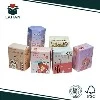
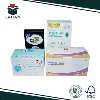
As a dedicated supplier of paper containers, I've often been asked whether paper containers can be used for frozen food. This is a question that combines practicality, safety, and environmental concerns, all of which are crucial in today's market. In this blog, I'll delve into the feasibility of using paper containers for frozen food, considering various aspects such as material properties, manufacturing processes, and market demands.
Material Properties of Paper Containers
To understand whether paper containers can hold up to the challenges of frozen food storage, we first need to look at the properties of the paper materials used. Paper is a versatile material made from cellulose fibers, which are derived from wood pulp, recycled paper, or other plant sources. The basic paper material, on its own, has some limitations when it comes to freezing. It is porous and can absorb moisture, which can lead to the paper becoming soggy and losing its structural integrity when in contact with frozen food or the condensation that forms as the food thaws.
However, modern paper container manufacturing has come a long way. We can treat paper with various coatings to enhance its performance. For example, a polyethylene (PE) coating can be applied to the inner surface of the paper container. This coating acts as a barrier, preventing moisture from seeping into the paper and keeping the container dry and sturdy. PE is a food - grade plastic that is commonly used in food packaging due to its excellent moisture resistance and chemical stability. Another option is to use a biodegradable coating, such as polylactic acid (PLA), which is derived from renewable resources like corn starch. PLA coatings offer similar moisture - blocking properties while being more environmentally friendly.
Manufacturing Processes and Design Considerations
The manufacturing process of paper containers also plays a significant role in their suitability for frozen food. When producing paper containers for frozen food, we pay close attention to the structural design. Reinforced edges and corners can be added to improve the container's strength and resistance to damage during handling and storage. Additionally, the container's shape and size are carefully designed to ensure proper stacking and storage in freezers.
We also use high - precision printing and cutting techniques to create a seamless and well - fitting container. A tight - fitting lid is essential to prevent air and moisture from entering the container, which can cause freezer burn on the food. Moreover, the manufacturing process must adhere to strict food safety standards. All materials used in the production, including coatings and inks, must be approved for contact with food and comply with relevant regulations such as the FDA (Food and Drug Administration) in the United States or the EU's food contact materials regulations.
Advantages of Using Paper Containers for Frozen Food
There are several advantages to using paper containers for frozen food. Firstly, from an environmental perspective, paper is a renewable resource. Unlike plastic containers, which are often made from non - renewable fossil fuels, paper can be recycled, reducing the environmental impact. Many consumers are becoming more environmentally conscious and prefer products that are packaged in sustainable materials.
Secondly, paper containers are lightweight, which can reduce transportation costs. This is beneficial for both the supplier and the retailer. Lighter packaging also means less energy is consumed during transportation, further contributing to environmental sustainability.


In terms of aesthetics, paper containers offer a more natural and appealing look compared to plastic containers. They can be easily customized with various printing designs, allowing brands to showcase their products and build brand recognition. For example, a local artisanal ice - cream brand can use a paper container with a beautiful hand - drawn design to attract customers.
Challenges and Limitations
Despite the many advantages, there are still some challenges and limitations to using paper containers for frozen food. One of the main challenges is the cost. The production of paper containers with special coatings and high - quality materials can be more expensive than traditional plastic containers. This can be a deterrent for some cost - sensitive manufacturers and retailers.
Another limitation is the limited insulation properties of paper. Compared to materials like foam or thick plastic, paper does not provide as much insulation. This means that the frozen food may thaw more quickly if the container is exposed to room temperature for an extended period. However, this can be mitigated by using additional insulation materials or by designing the container in a way that minimizes heat transfer.
Market Demand and Trends
The market demand for paper containers for frozen food is growing steadily. As mentioned earlier, the increasing environmental awareness among consumers is a major driving force. Many food manufacturers are looking for sustainable packaging solutions to meet the demands of their environmentally conscious customers.
In addition, the trend towards healthy and natural food products also favors paper containers. Consumers who are more likely to buy organic or locally sourced frozen foods are often more interested in sustainable packaging options. Retailers are also starting to recognize the market potential of paper - packaged frozen food and are actively promoting such products on their shelves.
Conclusion
In conclusion, paper containers can indeed be used for frozen food. With the right materials, manufacturing processes, and design considerations, paper containers can provide a safe, sustainable, and attractive packaging solution for frozen food. While there are still some challenges to overcome, such as cost and insulation, the growing market demand and technological advancements in paper packaging are likely to drive further innovation in this area.
If you are a food manufacturer or retailer interested in using paper containers for your frozen food products, I encourage you to [reach out to us for a detailed discussion]. We offer a wide range of paper container solutions, including the Ordinary Kraft Paper Bag for Shopping, which can be customized to meet your specific needs. Our team of experts is ready to work with you to develop the best packaging solution for your products.
References
- "Food Packaging: Principles and Practice" by Wilmer A. Yam and Cheryl L. Yam
- FDA regulations on food contact materials
- EU regulations on food contact materials
- Industry reports on sustainable packaging trends in the food industry