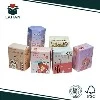
In the eco - conscious era we live in, recycled paper boxes have emerged as a popular choice for packaging due to their environmental friendliness. As a recycled paper box supplier, I am constantly exploring ways to enhance the stability of these boxes. Stability is a crucial factor as it directly affects the protection of the products inside, reduces the risk of damage during transportation and storage, and ultimately impacts customer satisfaction. In this blog, I will delve into several effective strategies to increase the stability of recycled paper boxes.
1. Material Selection
The foundation of a stable recycled paper box lies in the quality of the materials used. When sourcing recycled paper, it is essential to choose high - grade materials that have good strength and durability. For instance, recycled kraft paper is an excellent option. Recycled Kraft Boxes are known for their robustness and resistance to tearing. The long fibers in kraft paper provide better structural integrity compared to some other types of recycled paper.
Another aspect to consider is the thickness of the paper. A thicker paperboard generally results in a more stable box. The thickness is often measured in points (a point is 1/1000 of an inch). For products that are heavy or bulky, using a thicker paperboard, such as 28 - point or 32 - point, can significantly improve the box's ability to withstand pressure and maintain its shape.
Moisture resistance is also a key factor in material selection. If the recycled paper boxes are exposed to humid environments during storage or transportation, moisture can weaken the paper and compromise its stability. Therefore, it is advisable to select recycled papers that have been treated with moisture - resistant coatings. Biodegradable Cardboard Packaging with moisture - resistant features not only ensures stability but also aligns with environmental sustainability goals.
2. Box Design
The design of the recycled paper box plays a vital role in determining its stability. One of the most basic yet effective design elements is the use of proper folds and creases. Precise folding ensures that the box assembly is accurate and that all the panels fit together snugly. This not only enhances the initial stability of the box but also makes it easier to stack and store.
In addition to folds, the shape of the box matters. Boxes with square or rectangular shapes are generally more stable than irregularly shaped ones. These common shapes distribute the weight evenly across the panels, reducing the risk of uneven stress that could lead to structural failure.
Reinforcement features can also be incorporated into the design. For example, adding a double - walled construction can significantly increase the box's strength. The additional layer of paperboard provides extra support, especially for heavy - duty applications. Another reinforcement option is to use corner protectors. These can be made from the same recycled paper material or from a more rigid material such as plastic. Corner protectors help to absorb the impact at the most vulnerable parts of the box, preventing damage and maintaining the box's stability.
3. Assembly Techniques
The way a recycled paper box is assembled can greatly affect its stability. When using glue for assembly, it is important to choose a high - quality adhesive that provides a strong bond. The amount of glue applied also matters. Too little glue may result in loose joints, while too much can cause the paper to wrinkle and weaken the structure.
For boxes that are assembled using staples, the type and size of staples should be carefully selected. Larger staples generally provide a stronger hold, but they also need to be inserted at the right depth to ensure they do not pierce through the paper or cause it to tear.
Proper alignment during assembly is crucial. All the panels should be lined up accurately, and any flaps should be folded and attached in the correct position. This ensures that the box has a uniform structure and can withstand the forces applied during handling and transportation.
4. Testing and Quality Control
Before sending the recycled paper boxes to customers, rigorous testing should be conducted to ensure their stability. Compression testing is one of the most important tests. It measures the maximum amount of pressure a box can withstand before it collapses. By subjecting the boxes to different levels of pressure during testing, we can determine the optimal material, design, and assembly techniques for maximum stability.
Drop testing is another essential test. This simulates the real - world scenario of a box being dropped during handling. By dropping the box from different heights and angles, we can assess its ability to protect the contents inside and maintain its structural integrity.


In addition to these physical tests, visual inspection is also important. Any signs of damage, such as tears, loose joints, or uneven folds, should be identified and corrected. This helps to ensure that only high - quality, stable boxes are delivered to customers. Recycled Paper Box Packaging that undergoes strict quality control is more likely to meet the stability requirements of our clients.
5. Storage and Handling Recommendations
Proper storage and handling of recycled paper boxes are also important for maintaining their stability. Boxes should be stored in a dry, cool place away from direct sunlight and moisture. Excessive heat or moisture can weaken the paper and compromise the box's stability over time.
When stacking the boxes, it is important to stack them evenly and within the recommended weight limits. Uneven stacking can cause the boxes at the bottom to deform, reducing their stability. Additionally, proper handling during transportation, such as avoiding rough handling and ensuring the boxes are properly secured, can prevent damage and maintain their stability.
As a recycled paper box supplier, I understand the importance of providing our customers with stable and reliable packaging solutions. By implementing the strategies mentioned above, we can significantly increase the stability of our recycled paper boxes. Whether you are looking for packaging for small items or large, heavy products, we have the expertise and resources to meet your needs.
If you are interested in our Recycled Kraft Boxes, Biodegradable Cardboard Packaging, or any other Recycled Paper Box Packaging solutions, please feel free to contact us for a detailed discussion. We are always ready to work with you to find the best packaging solutions that combine stability, functionality, and environmental sustainability.
References
- "Packaging Materials and Technology" by Carla J. Haan.
- "The Handbook of Paper and Paperboard Packaging Technology" by Glen E. Ogden.
- Industry research reports on recycled paper box manufacturing and packaging trends.